Local Service Ads for Lawyers: What Google's Howe Law Case Study Shows
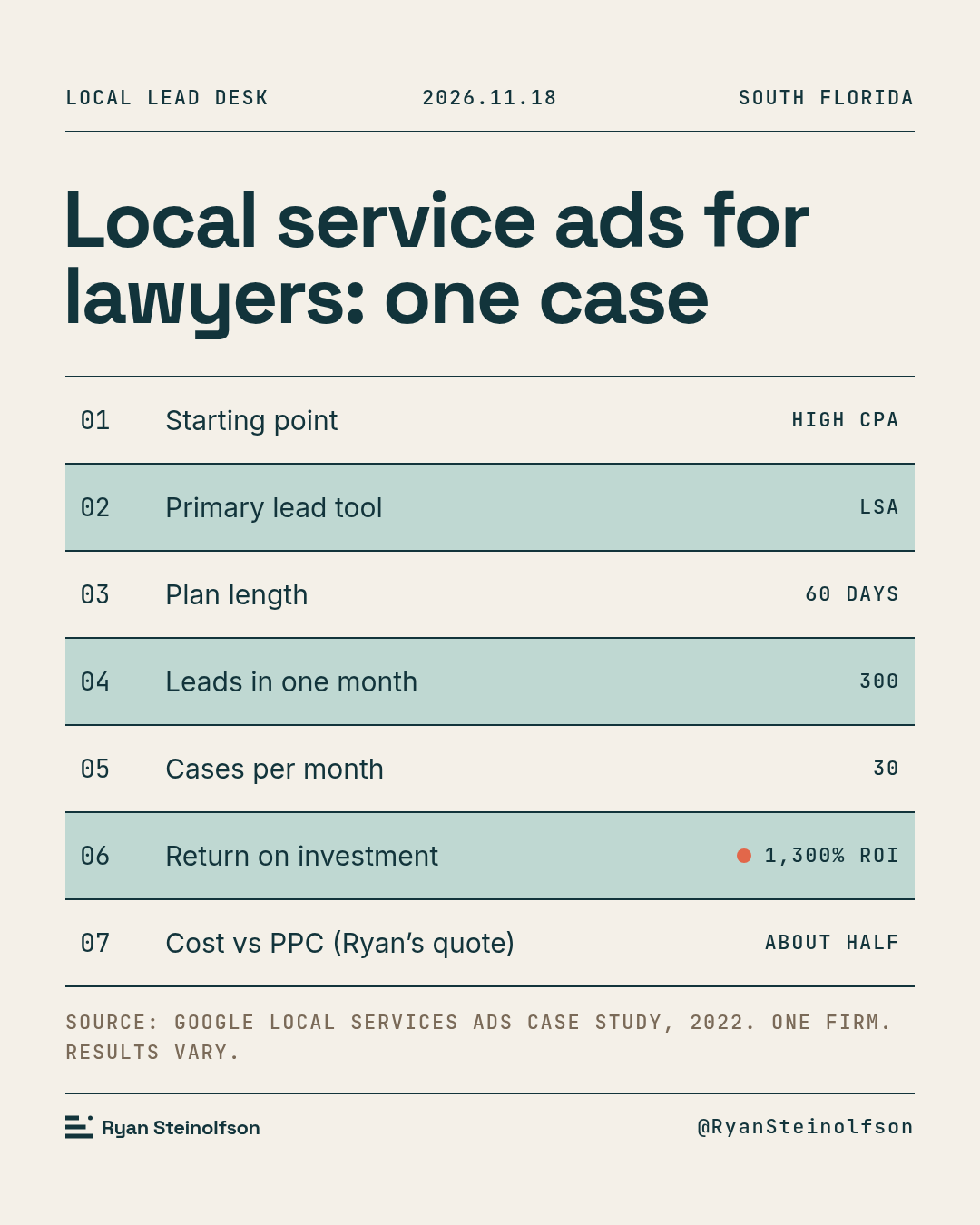
In 2022, Google published a case study about work my team did for a law firm called Howe Law. It is still the clearest example I have of local service ads for lawyers doing what they are supposed to do.
I want to walk through it plainly. What the problem was. What we set up. What Google reported. And what I would check if you run a firm and you are thinking about trying this.
One note before the numbers. This is one firm, in one market, in 2022. Results vary by firm and market. I am not promising you these results.
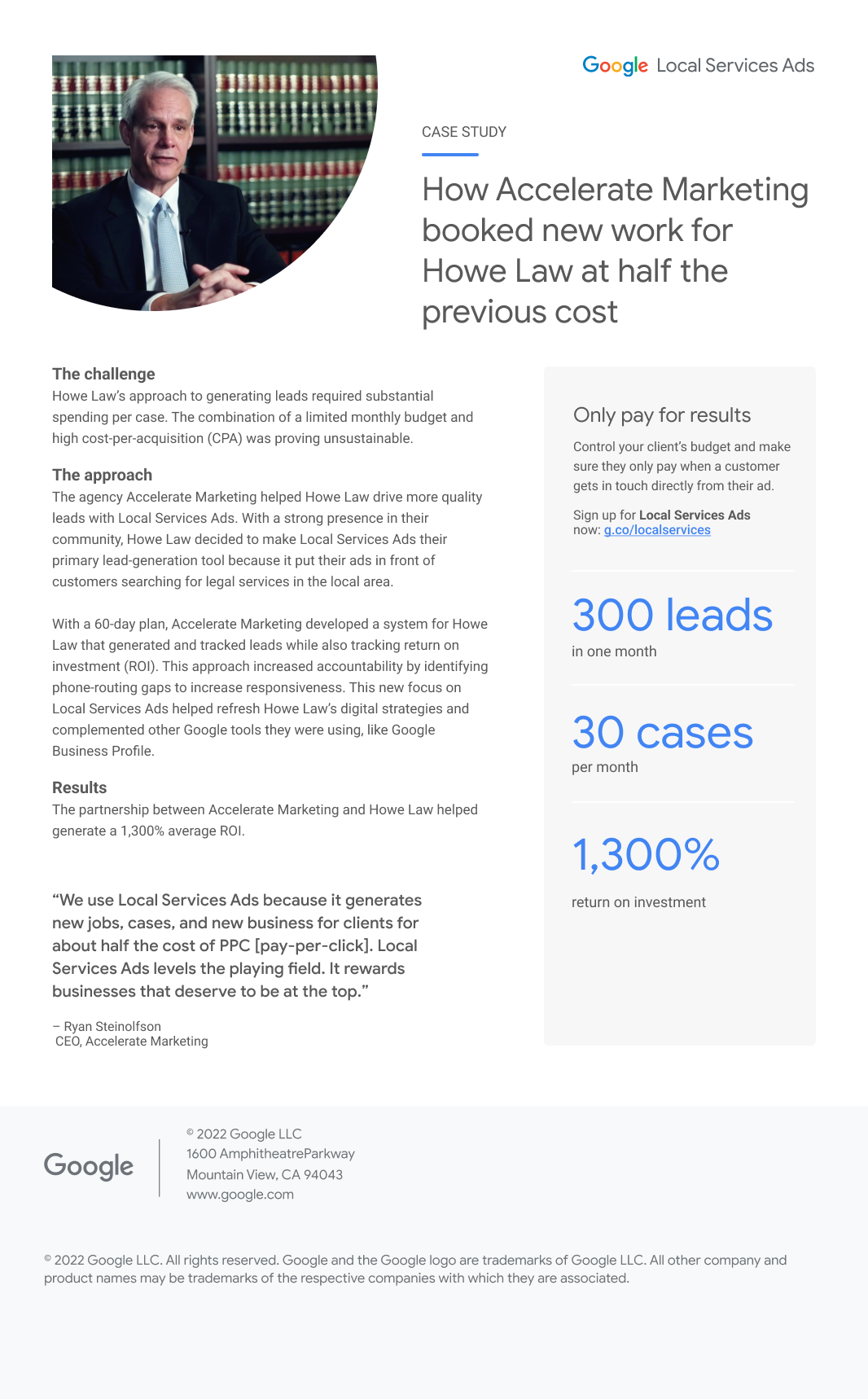
Here is Google's original document from 2022, in full.
What local service ads for lawyers actually are
Google Local Services Ads, or LSA, are the listings that can show at the very top of Google when someone searches for a lawyer nearby. They usually sit above the regular search ads.
For law firms, the listing carries a Google badge, along with your reviews and a way to contact you. When this case study ran, that badge was called Google Screened. Today it is called Google Verified. Google runs its own screening and verification before the badge appears.
The big difference is how you pay. With regular pay-per-click ads, you pay every time someone clicks, whether they contact you or not. With Local Services Ads, you pay per lead. A lead is a call, a message or a booking that comes from the ad.
Google's case study says it plainly. You only pay when a customer gets in touch directly from the ad.
The starting problem
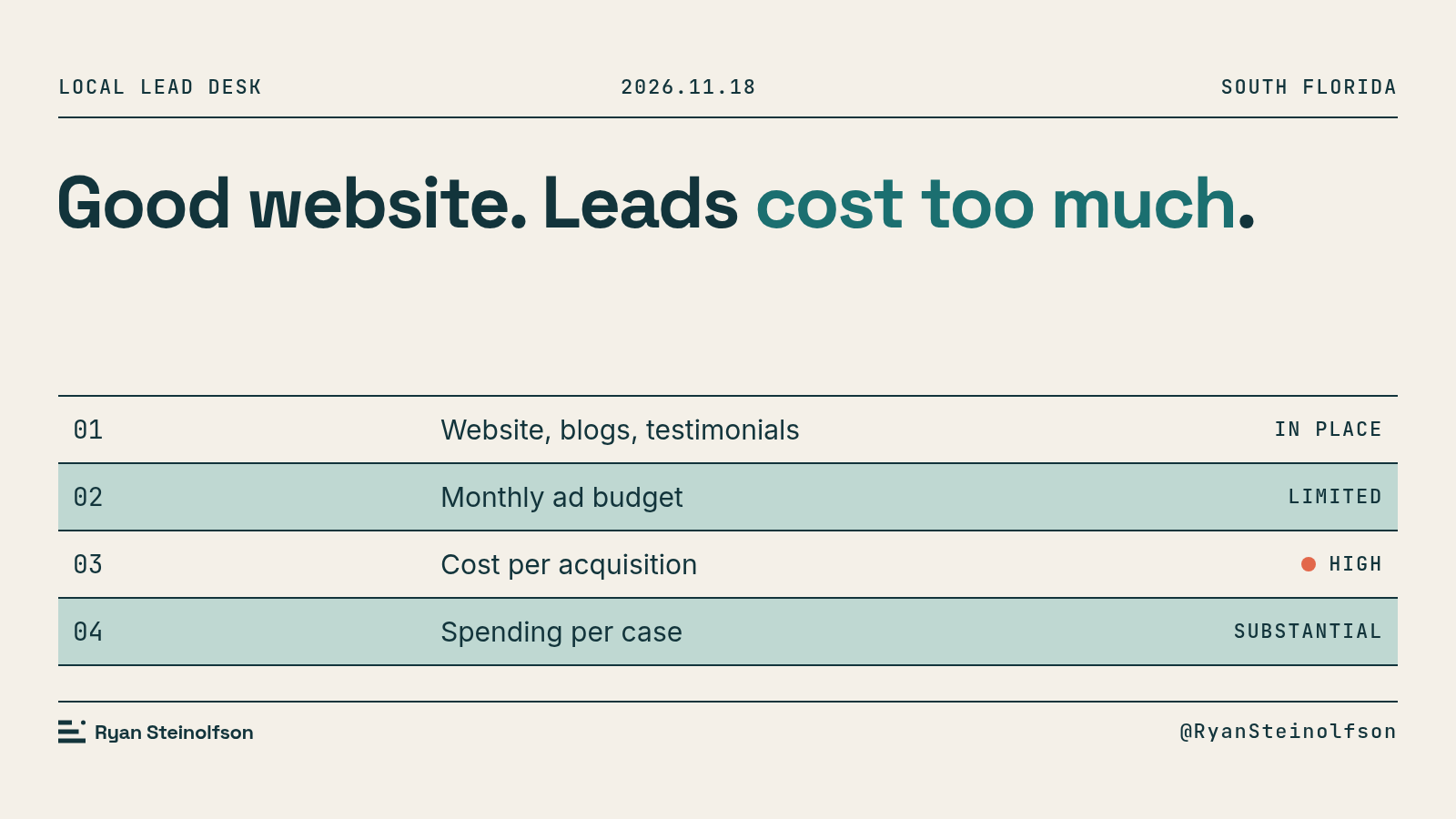
Howe Law was not doing anything obviously wrong. The firm had a good website. It had informative blog posts and positive client testimonials.
But online advertising was not turning into enough new clients. Google's case study says the firm's approach to generating leads required substantial spending per case. The monthly budget was limited and the cost per acquisition was high. The case study calls that combination unsustainable.
That is a common spot for a law firm. The marketing looks fine. The math does not work.
The 60-day plan
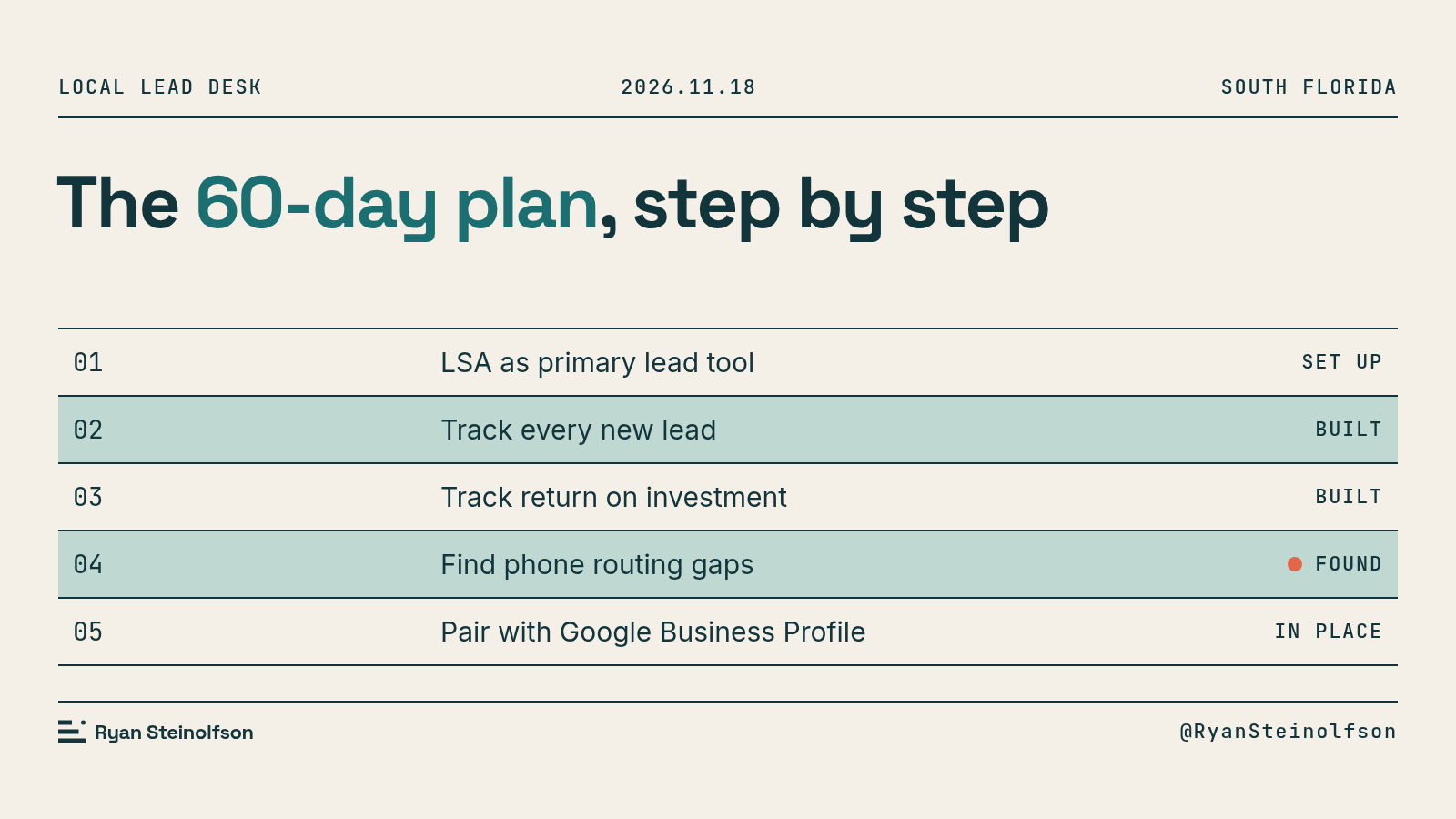
We built a 60-day plan around one decision. Local Services Ads would become the firm's primary lead generation tool.
The ads were only part of it. Here is what the plan covered.
- Make Local Services Ads the main lead source. Howe Law already had a strong presence in its community. Showing up in front of people searching for legal services nearby made sense.
- Track every new lead. We built a system so every lead was recorded, not guessed at.
- Track return on investment. Leads are not the goal. Cases are. So the system tracked what the leads turned into.
- Find the phone routing gaps. We found gaps in how calls were routed to the front desk and worked to close them so the firm could respond faster.
- Line it up with Google Business Profile. The firm was already using it. Local Services Ads complemented it.
The phone routing piece gets overlooked. Google's case study says this approach increased accountability by identifying phone-routing gaps to increase responsiveness. I agree with that.
When you pay per lead, how your office handles the first call is part of the campaign.
The results Google published
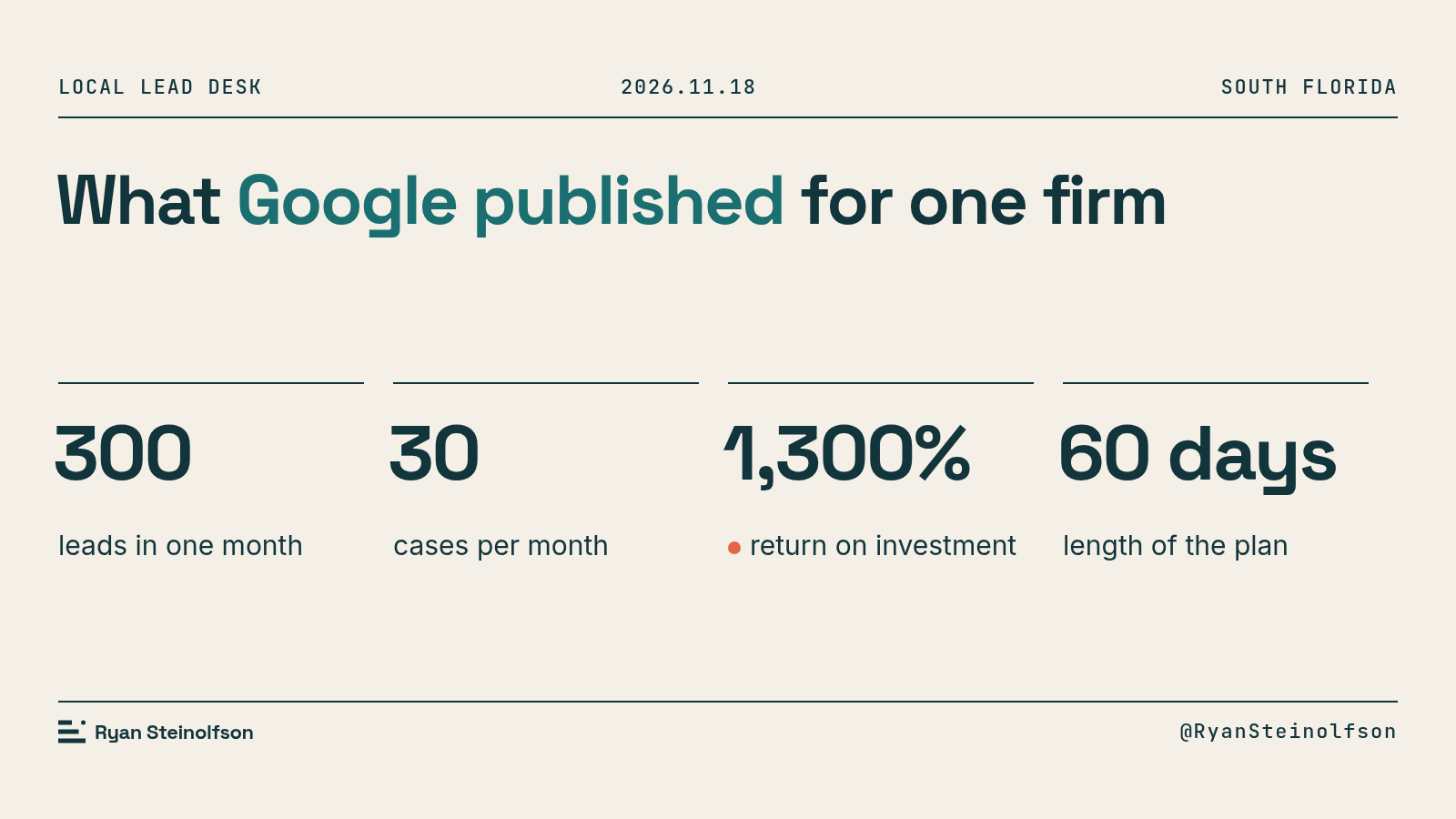
Here is what Google's one-page case study reports. I am using only the figures in the source documents.
- 300 leads in one month.
- 30 cases per month.
- A 1,300% return on investment.
Google's headline for the case study says the firm booked new work at half the previous cost.
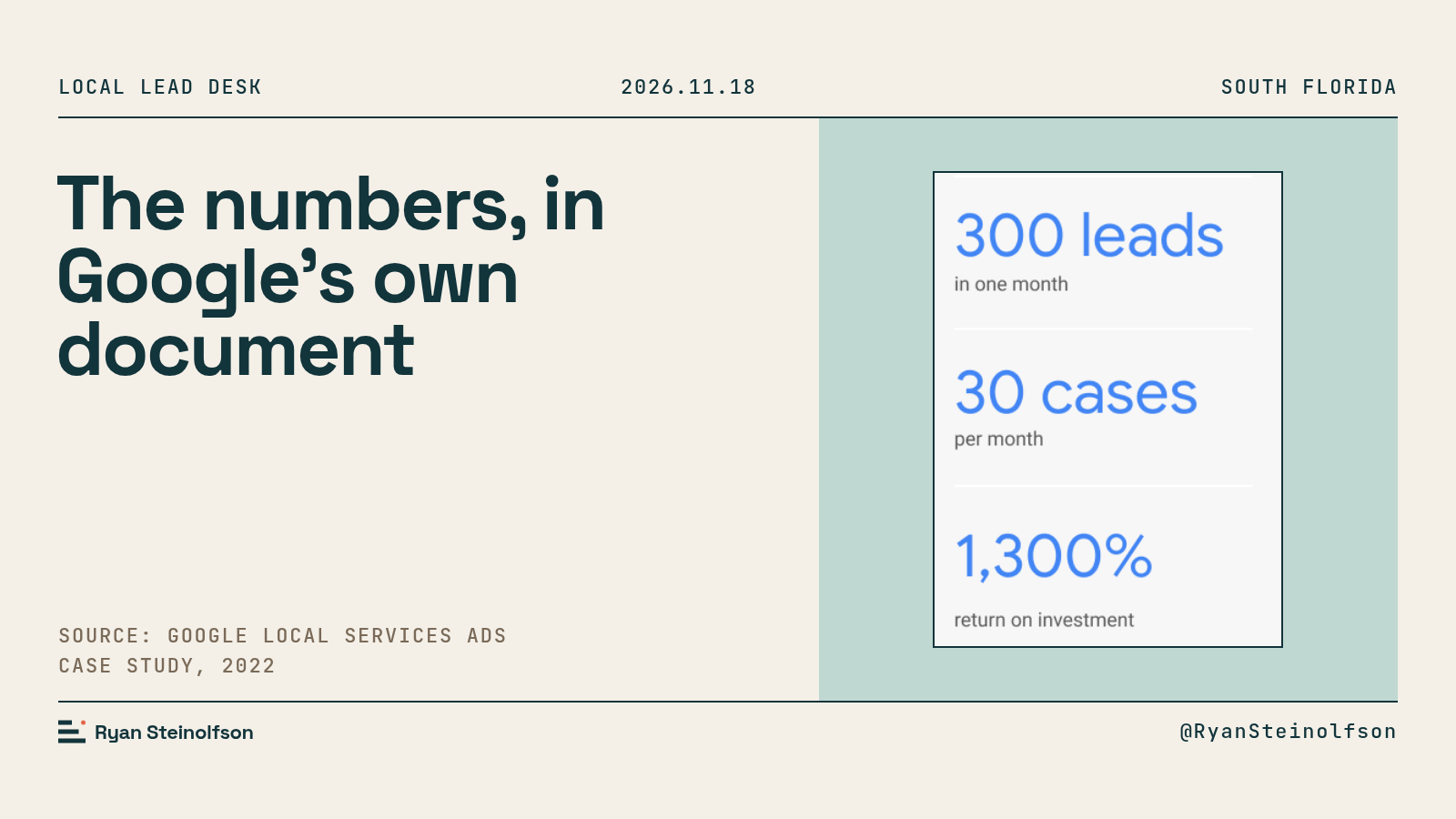
That image is cropped from Google's own one-page case study. I did not redraw it.
There is also a longer write-up of the project. It is not Google's document, so I am keeping it separate. It says the firm saw results from the new campaign within 60 days. It says Local Services Ads increased customer consultations by 300 and led to 30 cases each month, on average. It also notes 467 reviews at 4.9 stars for one office and 308 reviews at 5.0 stars for the other.
Again, this is one case from 2022. Your market, your practice area and your intake process will change the outcome.
What I meant by about half the cost of PPC
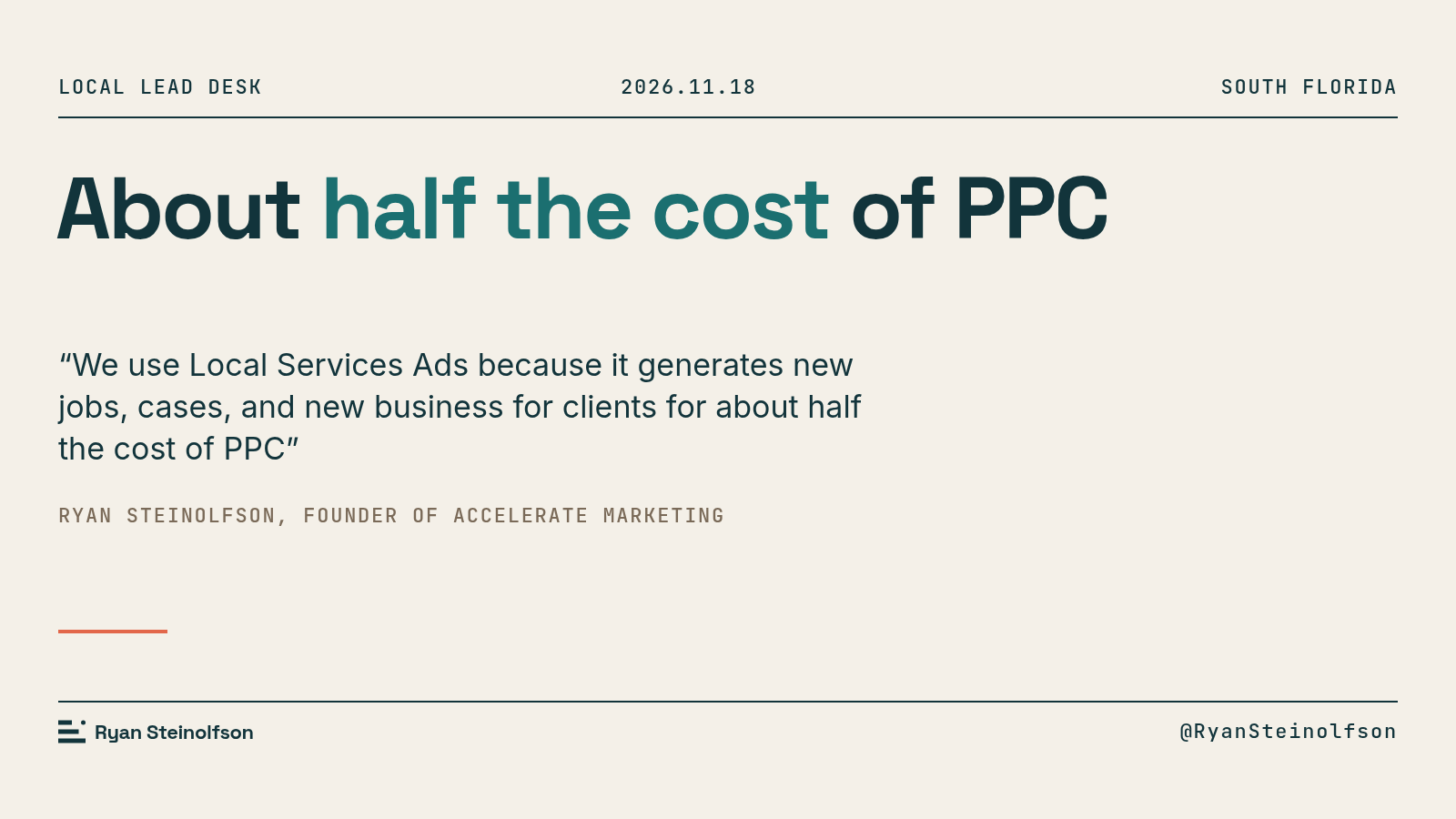
Google quoted me in the case study. Here is the quote.
"We use Local Services Ads because it generates new jobs, cases, and new business for clients for about half the cost of PPC [pay-per-click]. Local Services Ads levels the playing field. It rewards businesses that deserve to be at the top."
Ryan Steinolfson, founder of Accelerate Marketing
That quote is about what I see across clients in general. It is not a figure for Howe Law. For this firm, Google's headline says half the previous cost.
I still think the reason is simple. You are not paying for clicks that go nowhere. You pay when someone actually contacts the firm.
And placement is not only about budget. Reviews, responsiveness and how close you are to the person searching count too. A firm that does good work and responds quickly can compete with a firm that spends more.
That is what I meant by leveling the playing field.
What to set up and check if you are considering LSA
If you run a law firm and want to try Local Services Ads, here is where I would start.
- Complete the profile fully. Practice areas, service area, hours. This is the basic information Google asks for when you set up.
- Get through Google's screening and verification. Lawyers get the Google Verified badge only after Google's checks, which include verifying your license. Start it early.
- Set a budget you can hold steady. You control the budget. You pay per lead, not per click.
- Check your phone routing before you turn anything on. Call your own number. See where a new inquiry lands and how fast it gets to the person who can book a consultation.
- Track every lead to an outcome. Lead, consultation, signed case. Without that, you cannot calculate a return.
- Keep your Google Business Profile current. The two work together.
- Ask for reviews consistently. Reviews show on the listing.
- Look at your leads regularly. Check that they match the practice areas you selected.
None of this is complicated. Most of it is setup and follow-through.
The point
Local Services Ads did not do this alone. The plan did. Ads at the top of Google, tracking behind them, and work to close the gaps in how calls reached the front desk.
Pay for leads, not clicks. Know what every lead turns into. Close the gaps in the handoff.
That was the whole plan in 2022. It is still how I would approach it.
I walk through the full case study in the video at the top of this post.
Sources: Google Local Services Ads case study, Howe Law. Copyright 2022 Google LLC. The results within 60 days, the consultation figure and the review counts come from a longer write-up of the same project, which is not Google's document.